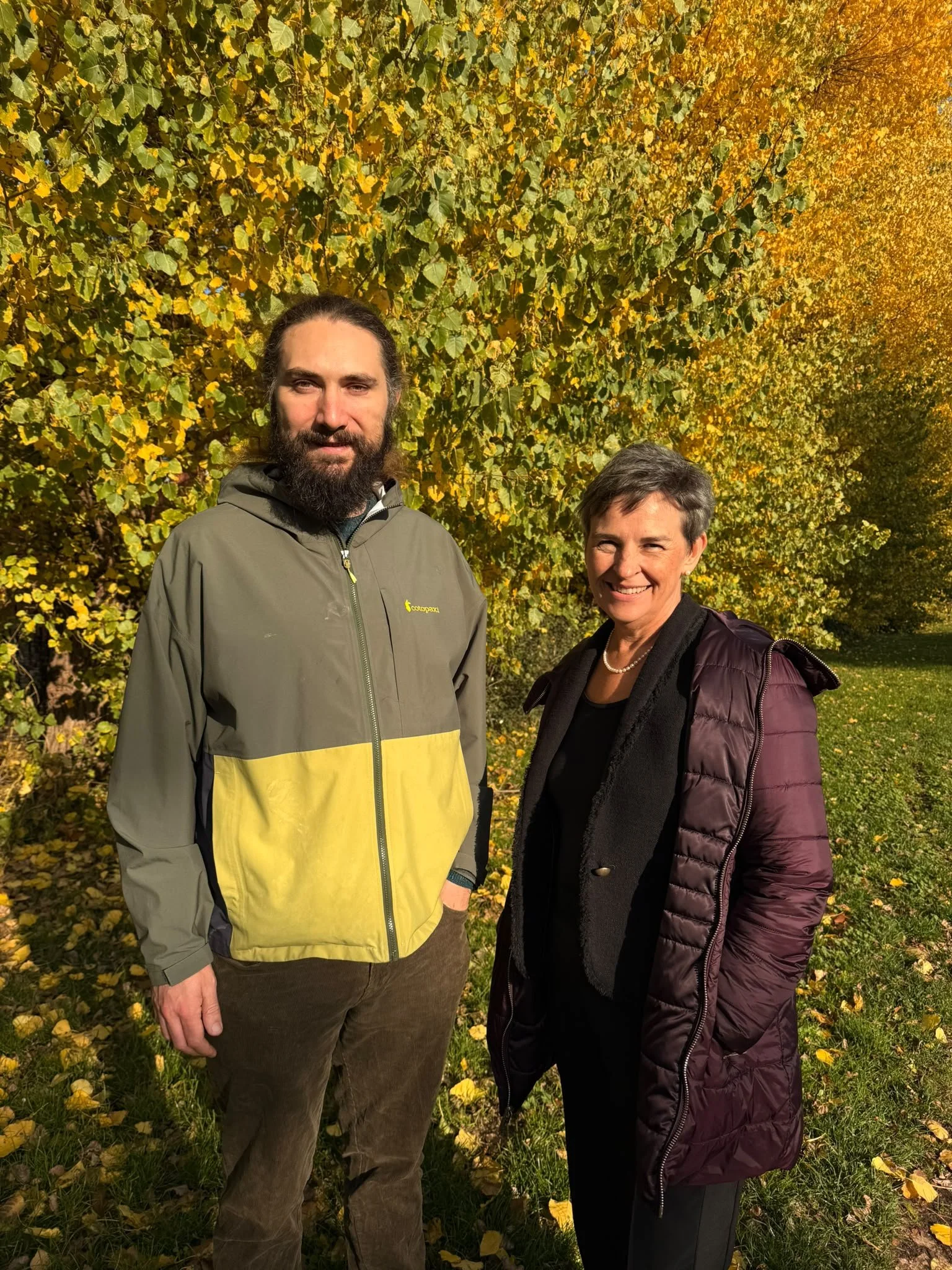
Mary Creagh MP and Alex Jones, Ecology and Biodiversity Officer for Coventry City Council
Mary Creagh, MP for Coventry East, visited Longford Nature Park to hear about the ongoing habitat restoration work and the plans for the project’s next phases.
Mary toured the site with Alex Jones, Ecology and Biodiversity Officer for Coventry City Council, where they discussed the five-year restoration programme. The first of the project’s six sections has been funded, and the team is now looking at the most efficient routes to secure funding for the later phases and preparing a further funding bid. Current project costs are estimated at £35,000.
A key priority is restoring the park’s historic ponds and swamp habitat. Small-scale tree removal is under way to open up the ponds and improve wetland conditions. The original pond inlets, created by the Environment Agency in the mid-1990s, have deteriorated through lack of maintenance.
Plans for the site include restoring existing swamp habitat, creating a new swamp area, managing weed beds, softening habitat edges and installing a boardwalk. The site is expected to develop into a fen-type habitat by December.
The team also plans to reshape the river channel and feeder inlets, and to clear blocked pipes to improve water flow and habitat connectivity. An inlet under the footpath connects the site to the river.
Bullheads, a European protected species, are present at Longford and eels have also been reported in the area, which would be only the second recorded sighting locally, according to BBC CWR.
Harvest mice, one of the UK’s rarest small mammals, are a key target species after being confirmed upstream at Basford Brook. Water mint and horseradish have been recorded on site, along with crack willow, whose value to biodiversity and historic use by basket weavers came up during the visit. Long-tailed tits could be heard calling during the walk.
A full botanical survey is planned, as the last local wildlife survey for the area was carried out in the late 1990s. The project is also working with Warwick University on environmental DNA (eDNA) monitoring. This will help confirm the presence of key species, support species-specific conservation work and strengthen future funding applications.
The Habitat Management Plan is in its final stages with the County Council, and the team hopes to establish two council-run sector sites. Future work includes installing bee bricks and hedgehog highways, continuing ecological surveying and restoration, and using the eDNA evidence to unlock further conservation grants.